How an RJB guitar is actually built
Every RJB guitar — from the first cut of wood to the final buff of lacquer — passes through Rob Budzinski's hands alone, in a small shop in Dillsburg, Pennsylvania.
Carefully selected woods
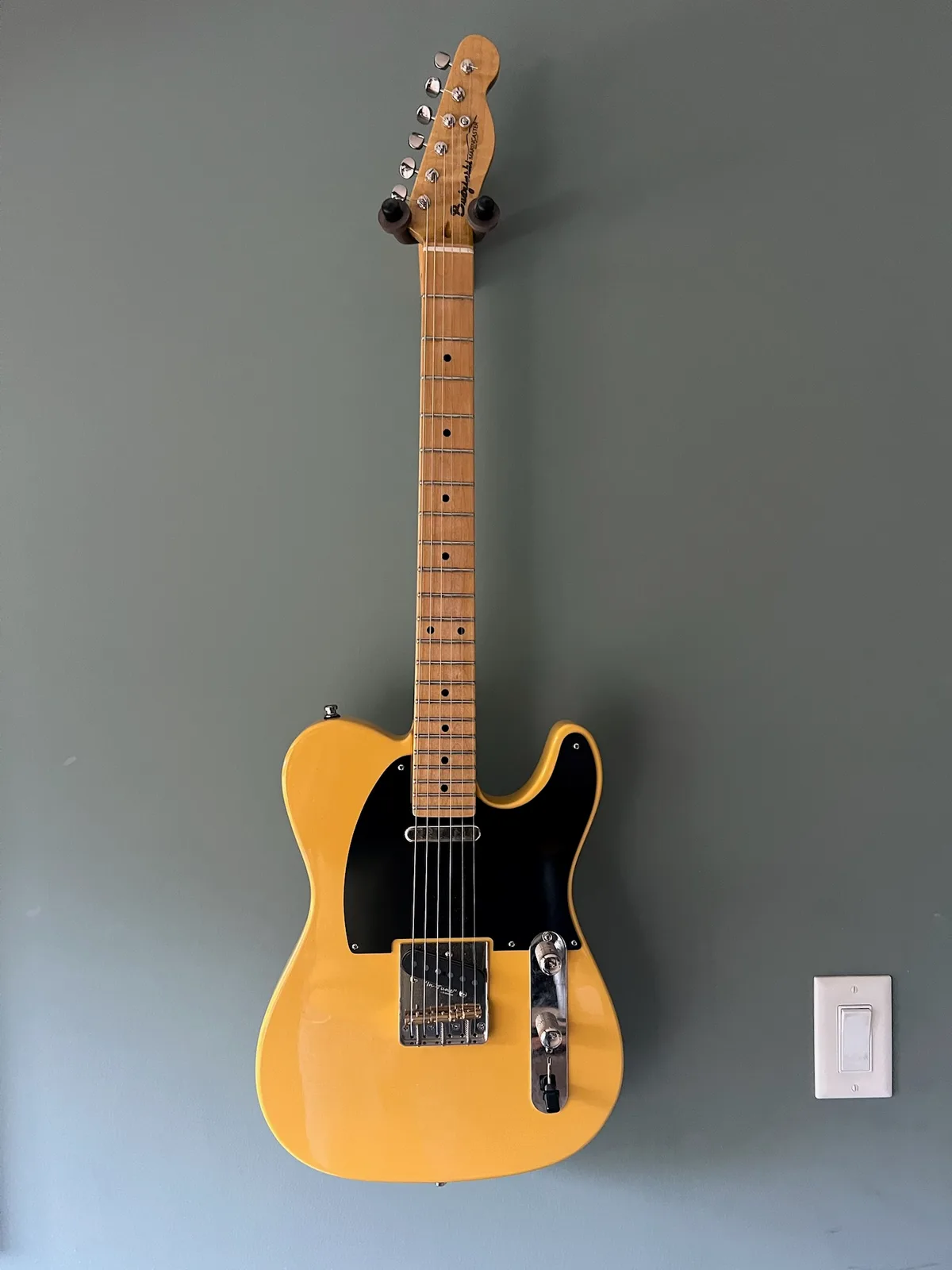
Every build starts at the wood rack. Necks and bodies are built from figured maple, ebony, and rosewood alongside denser exotic hardwoods like zircote, goncalo alves, and purpleheart — chosen as much for weight, resonance, and stability as for figure and color. Matching those woods to each other, grain to grain, is as much a part of the craft as the carving that follows.
A simplified cross-section of a neck-through "hippie sandwich" — contrasting woods laminated the full length of the instrument.
Neck-through & the "hippie sandwich"
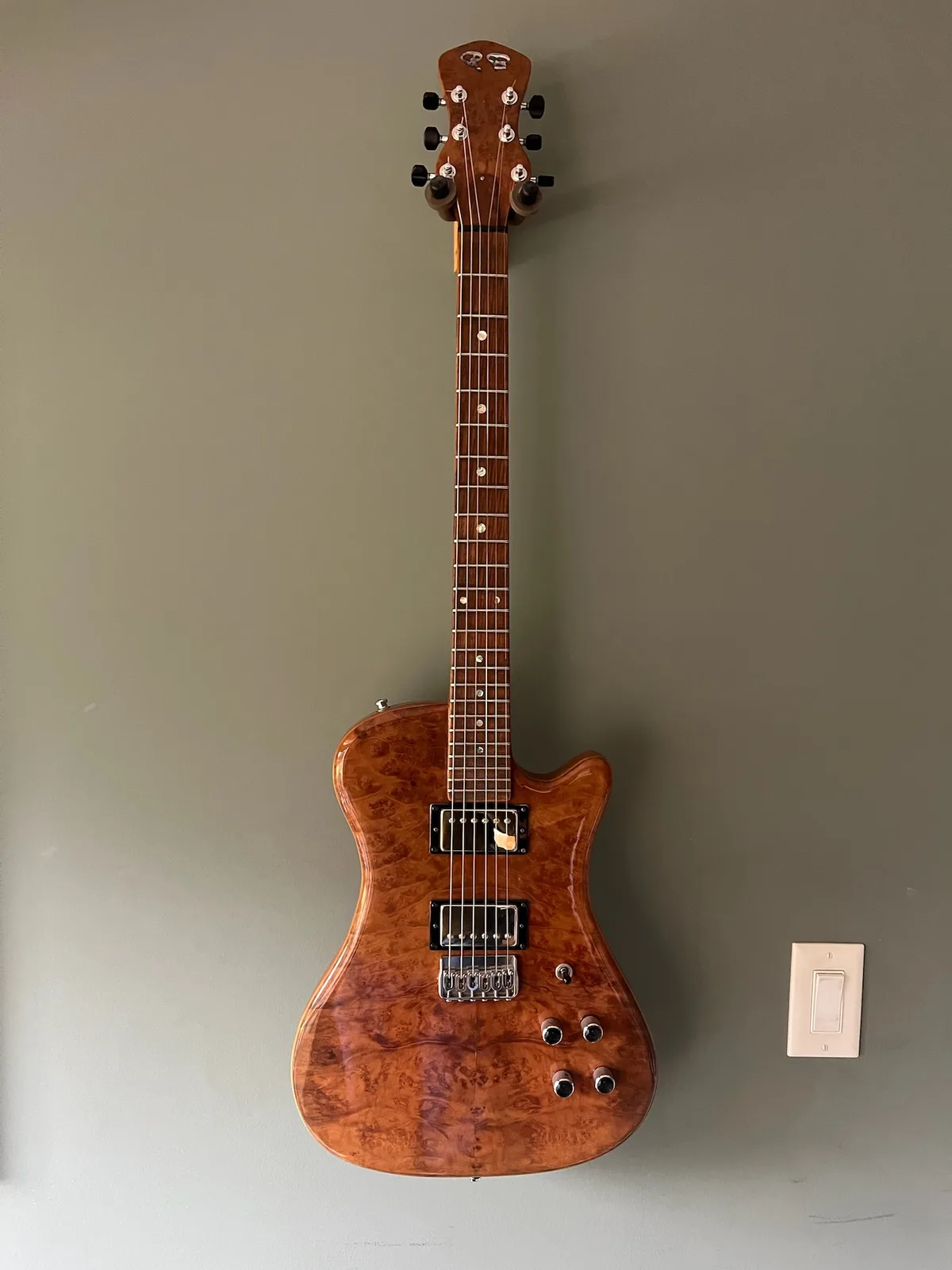
Rather than bolting a neck onto a body, Rob laminates a single spine of contrasting woods that runs uninterrupted from headstock to tail — with wings glued on either side to form the body. It's the same "hippie sandwich" construction that defined the golden age of custom guitars, and it means more sustain, more resonance, and a neck that will never shift or loosen.
Lightweight, semi-hollow & chambered
Bodies are hollowed and chambered from the inside, shedding weight without sacrificing structure. The result is a guitar that feels light on a strap for a four-hour set and sounds airy and resonant unplugged, long before it ever reaches an amplifier.
The scalloped headstock
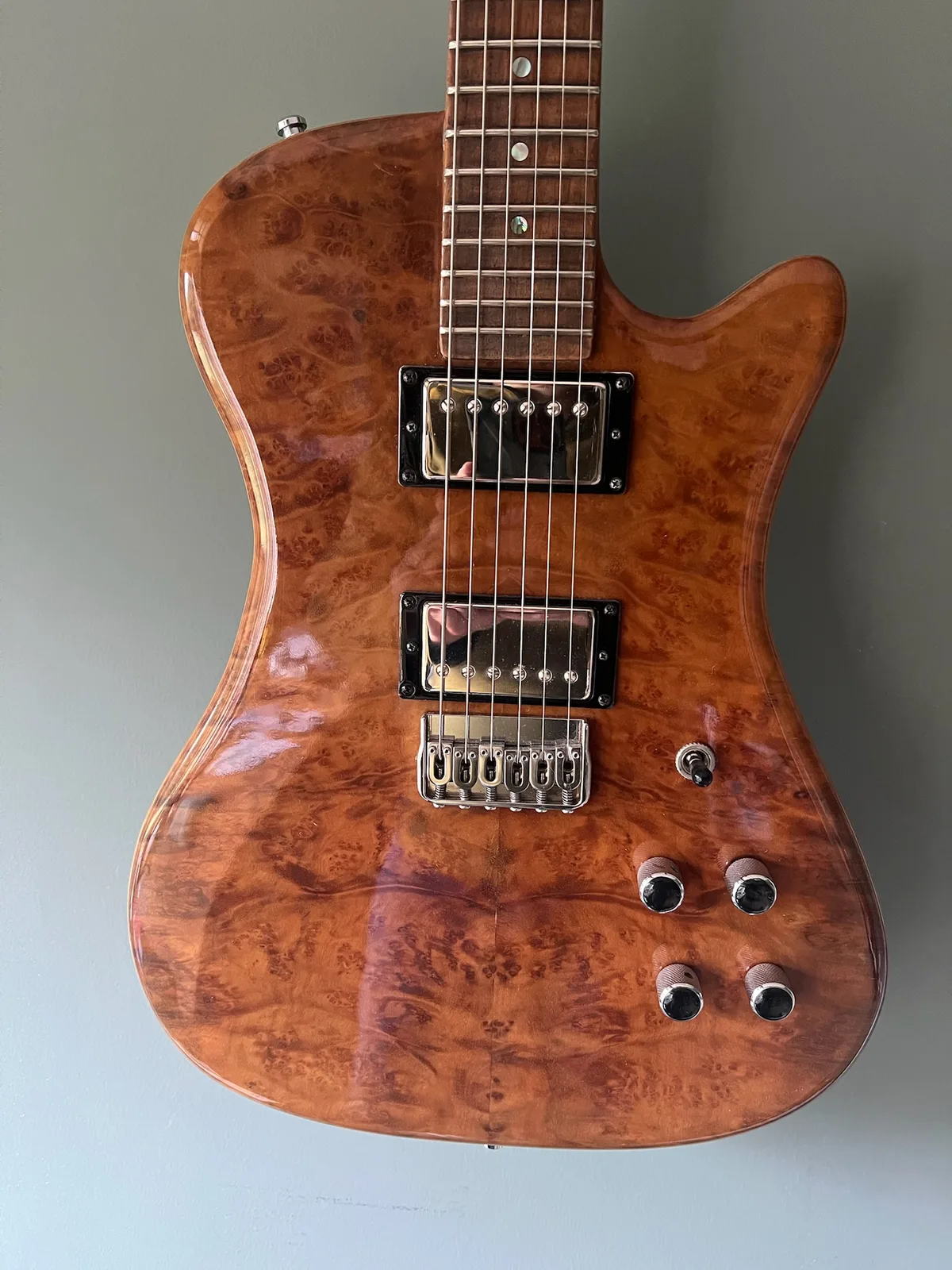
Rob's signature touch: a hand-scalloped headstock that's become his quiet signature across every build. It's a small detail with an outsized effect — instantly recognizable, and one more place where hand-shaping shows in the final instrument.
Nitrocellulose lacquer, start to finish
The same finish used on vintage instruments — thinner, harder, and more alive than modern polyurethane, and one that ages gracefully instead of sealing the wood shut.
10–12 coats hand-sprayed over 2–3 days.
Left to cure 3–4 weeks before any sanding begins.
Wet-sanded by hand through progressive grits, up to 2000.
Hand-buffed to a mirror finish that ages and checks naturally, like a vintage instrument.
Inspired by Alembic, informed by the Dead
Rob's approach traces back to the guitars Alembic built for the Grateful Dead in the 1970s — deep chambering, exotic hardwoods, and a look that was as considered as the tone. That lineage still shows up in every RJB build: the scalloped headstock, the neck-through spine, and the belief that a guitar should be as resonant unplugged as it is on stage.